Introduction & Significance of Water Filtration
Water filtration and purification represent fundamental necessities in modern society, as liquid quality directly impacts public health and industrial operational efficiency. In domestic environments, suspended solids, microorganisms, and particulate contaminants compromise drinking safety and appliance longevity.
Across industrial manufacturing—most notably beverage production, pharmaceutical processing, swimming pool maintenance, and power generation—employing high-purity water is indispensable. Unfiltered process streams cause heavy equipment fouling, degrade end-product quality, and drive up maintenance costs. Consequently, liquid filtration serves as a cornerstone for both health protection and manufacturing sustainability.
Perlite as a Lightweight & Natural Mineral Medium
Expanded perlite processed at Esfahan Perlite Complex is a natural mineral derived from silica-rich volcanic glass. When raw perlite ore is subjected to rapid thermal expansion at 850°C to 900°C, internal moisture vaporizes, popping the mineral into white, ultra-lightweight granules with intricate cellular structures.
This porous architecture makes expanded perlite an exceptional, chemically inert, and eco-friendly filter medium. Its high porosity and low bulk density establish perlite as a versatile filter aid across municipal water treatment, agriculture, construction, and high-precision liquid filtration.
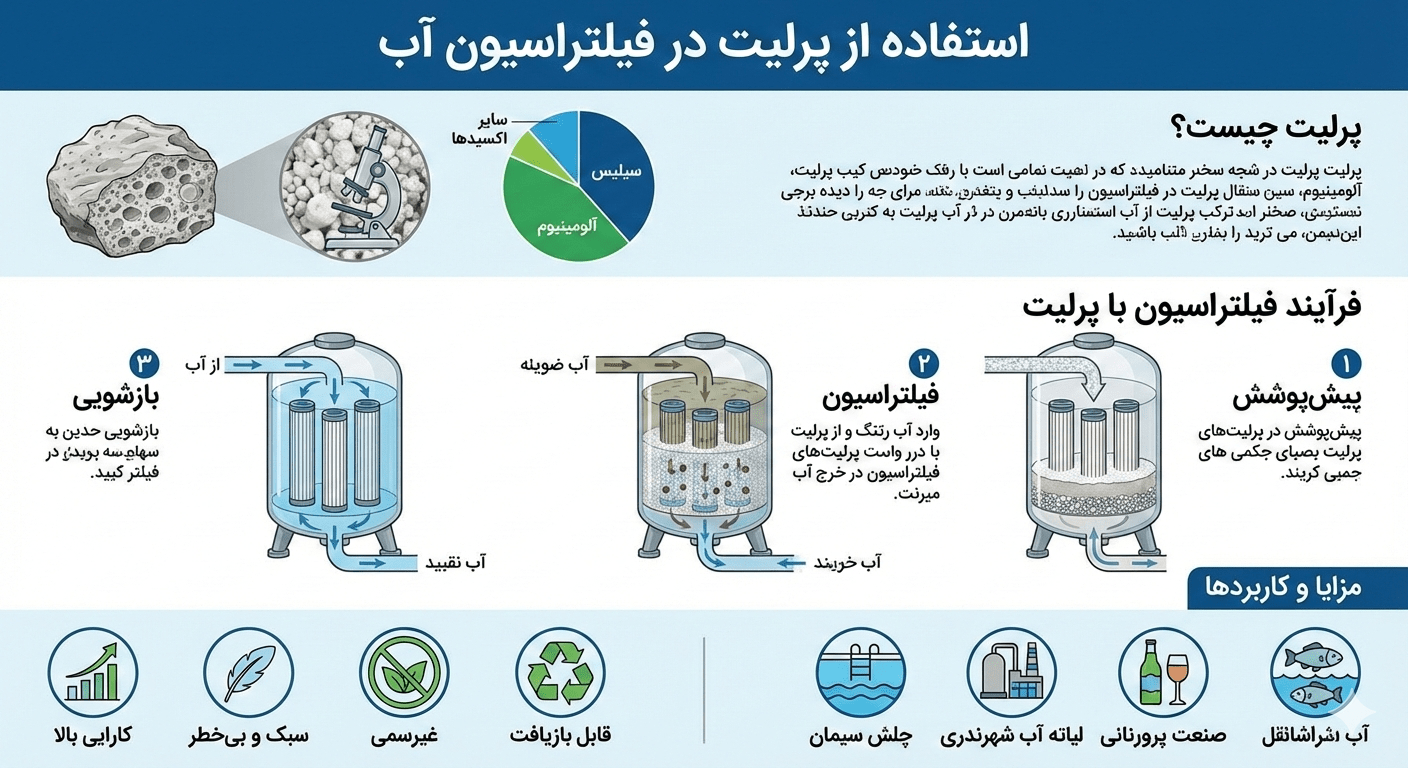
Microscopic porous matrix of micronized perlite, capturing suspended physical solids and impurities during filtration
Why Is Perlite Used in Water Filtration?
Selecting an optimal filtration medium determines effluent clarity, cake pressure drop, and operational costs. Expanded perlite offers compelling technical advantages as a precoat filter aid:
1. High Porosity & Particulate Interception
The primary rationale for employing perlite in liquid filtration lies in its multi-pored structure and superior particulate entrapment. Expanded perlite creates a tortuous microscopic maze that traps insoluble solids, turbidity, and physical contaminants while permitting uninhibited fluid flow.
Because of its high surface area per unit volume, perlite achieves rapid flow rates alongside high clarity. This makes perlite the gold standard in juice clarification, vegetable oil refining, and municipal pre-filtration beds.
2. Ultra-Lightweight Unit Weight & Easy Handling
Expanded perlite is substantially lighter than traditional filtration media like silica sand or garnet. This ultra-lightweight character lowers shipping expenses and simplifies bag handling and vessel loading for plant operators.
In large-scale industrial filtration plants, perlite's low bulk density reduces pump power requirements during precoat slurry circulation. Furthermore, filter cake discharge and backwashing cycles proceed rapidly, minimizing system downtime and operational overheads.
3. Complete Chemical Inertness & Zero Taste/Odor Transfer
Perlite is chemically inert with a neutral pH (~7.0). It does not react with acids, weak alkalis, or organic solvents, maintaining absolute chemical purity in filtered liquids.
Crucially, refined perlite grades from Esfahan Perlite Factory add zero taste, color, or odor to filtered streams. Combined with its natural resistance to fungal and bacterial colonization, perlite provides an uncompromised, sterile filtration medium for wine, beer, edible oils, pharmaceuticals, and municipal drinking water.
Pros & Cons of Perlite in Water Purification
Evaluating the advantages and boundary conditions of expanded perlite helps process engineers design optimized filtration systems:
Key Technical Advantages
- Economical Operational Cost: Perlite offers cost advantages over synthetic membrane cartridges and diatomite.
- Exceptional Clarification Yield: High flow-to-clarity ratio captures microscopic suspended solids.
- 100% Eco-Friendly & Non-Toxic: Natural mineral media free from synthetic chemical additives.
- Stable Pressure Drop: Porous cake structure prevents rapid bed blinding or flow chokes.
System Considerations
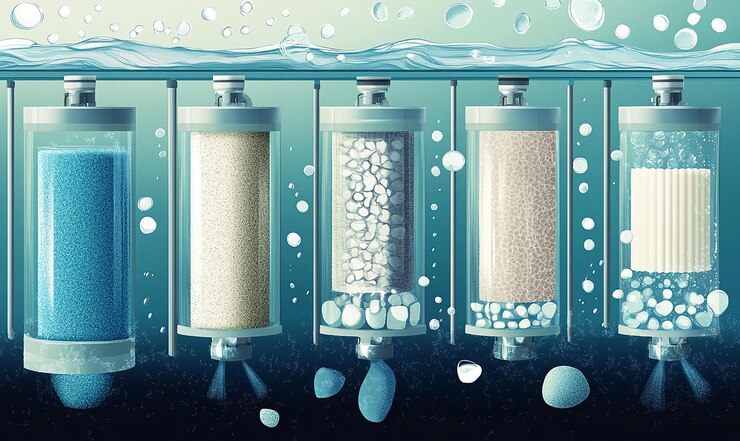
While perlite excels at physical solid-liquid separation, it does not remove dissolved chemical ions or heavy metals on its own. Consequently, perlite is frequently combined with active media like activated carbon or reverse osmosis (RO) membranes in comprehensive multi-stage water treatment trains.
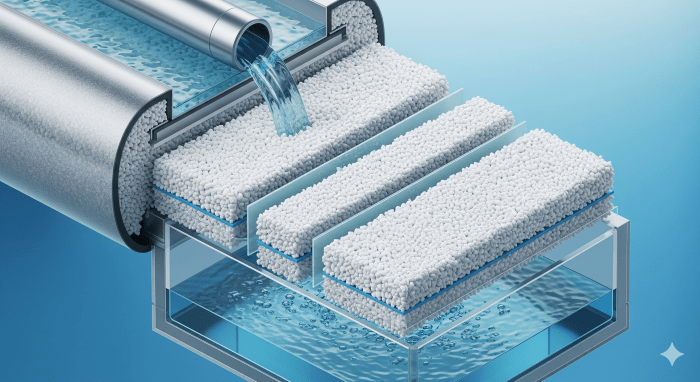
Pressure leaf filter vessel operating with perlite filter precoat in commercial food and beverage processing
Comparative Analysis: Perlite vs. Alternative Filter Media
Choosing the right filtration medium requires matching particle size distributions against targets:
Perlite vs. Activated Carbon
Perlite functions primarily as a physical strainer for suspended solids, whereas activated carbon specializes in chemical adsorption—removing chlorine, VOCs, dissolved organic compounds, and unwanted odors. In advanced treatment plants, perlite serves as a pre-filter to protect activated carbon beds from physical particulate fouling.
Perlite vs. Silica Sand
Silica sand is standard in heavy deep-bed media filters. However, perlite provides a much lower bulk density, higher void fraction, and superior trapping of fine particulates. Perlite requires less backwash volume and energy than heavy sand beds, though sand offers longer media life before replacement.
Perlite vs. Diatomaceous Earth (Diatomite)
Diatomite and perlite are direct competitors in precoat filtration. While diatomite traps extremely fine particles, perlite is significantly lighter in bulk density (yielding ~20–30% more cake volume per kilogram), costs less per batch, and poses no respirable crystalline silica hazards during dry handling.
| Performance Metric |
Expanded Perlite |
Activated Carbon |
Silica Sand |
Diatomaceous Earth |
| Filtration Mechanism |
Physical Strainer |
Chemical Adsorption |
Deep Bed Straining |
Physical Strainer |
| Fine Particulate Trapping |
High |
Low |
Moderate |
Very High |
| Bulk Density |
Ultra-Lightweight |
Moderate |
Heavy |
Lightweight |
| Relative Material Cost |
Economical |
High |
Low |
Moderate to High |
| Backwash & Cleaning |
Easy Cake Discharge |
Thermal Reactivation |
Heavy Backwash Flow |
Moderate Discharge |
| Health & HSE Profile |
Safe Natural Glass |
Safe Carbon Matrix |
Standard Mineral |
Requires Dust Controls |
Summary & Direct Inquiries
In conclusion, expanded perlite acts as a versatile, ultra-lightweight, and chemically inert filter aid essential to modern liquid purification. Its ability to deliver high flow rates alongside crystal-clear filtrate without altering liquid flavor, odor, or chemistry makes it an invaluable asset in food, beverage, pharmaceutical, swimming pool, and industrial water treatment facilities.
For technical sieve analysis, COA laboratory certificates, and bulk factory orders, contact the technical sales department at Esfahan Perlite Company.
Hello. We deployed fine expanded perlite powder from Esfahan Perlite as a precoat filter aid in our juice clarification line. Effluent clarity was exceptional and flow rate remained stable without rapid cake compaction. Thank you for the technical guidance.
Greetings Eng. Sadeghi. We are delighted that Esfahan Perlite filtration grade fulfilled your plant's clarity standards. Our micronized precoat grades are processed under zero-chemical conditions specifically for food and beverage applications. Best regards, Factory Editorial Team.
Can micronized perlite replace diatomaceous earth in commercial swimming pool filters? Is it more economical?
Hello Mr. Nouri. Yes, micronized perlite serves as a direct, economical substitute for DE in pool grid filters. Because perlite is lower in bulk density, you need fewer kilograms per precoat charge while obtaining equal water clarity. Best regards, Factory Editorial Team.