Scientific & Industrial Definition of Expandable Perlite
Perlite is a vitreous volcanic glass formed by the rapid cooling of acidic lava rich in silica. It naturally contains trapped water molecules in its mineral matrix which, when subjected to rapid industrial heating at 850°C to 900°C, vaporize instantly to cause dramatic volumetric expansion—a process known as perlite expansion. The resulting material consists of white, ultra-lightweight granules with a porous, sponge-like structure.
Industrially, expanded perlite refined at Esfahan Perlite Complex is recognized as an advanced mineral additive offering exceptional physical properties: ultra-low density, high thermal insulation, low moisture absorption, and universal chemical stability. These attributes establish expanded perlite as an economical, high-performance filler across paint and resin formulations, liquid filtration, cryogenic insulation, agriculture, and lightweight composites.
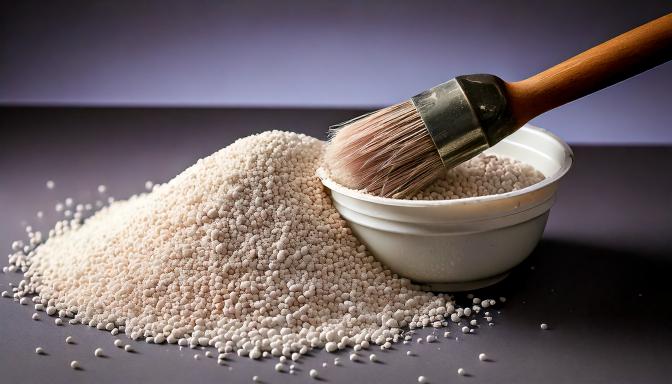
Microscopic cellular structure and micronized grain distribution of perlite, enhancing paint formulation volume and reducing dead weight
Key Characteristics of Perlite in Paint & Resin Systems
Due to its unique physical matrix and stable chemical composition, expanded perlite provides a suite of essential benefits tailored for paint and coating manufacturers:
1. Low Density & Specific Weight Reduction
The low unit weight of perlite allows formulators to deploy it as a lightweight functional filler without altering film workability. This results in coatings with lower specific gravity, reduced sag on vertical surfaces, improved hiding power, and lower shipping and handling costs per gallon.
2. Chemical Stability & Universal Inertness
The exceptional chemical inertness of perlite processed at Esfahan Perlite Factory guarantees zero adverse reactions when blended with organic solvents, acrylic resins, alkyds, or pigments, ensuring long-term shelf stability of the paint matrix.
3. Elevated Thermal Endurance
Perlite's inorganic refractory nature enhances coating resistance against extreme ambient temperature fluctuations, buffering substrate surfaces against thermal shock and cracking.
4. Viscosity Control & Oil Absorption
Balanced oil absorption parameters enable precise rheology and viscosity control, optimizing paint application whether sprayed, rolled, or brushed onto target surfaces.
Technical Rationale for Perlite in Coating Formulations
Laboratory evaluations confirm that incorporating micronized perlite into paint matrices improves pigment dispersion and film integrity:
Enhanced Coverage & Coating Texture
A primary advantage of integrating perlite into paint formulas is the noticeable improvement in film hiding power and surface texture. The porous cellular geometry of micronized perlite allows particles to disperse evenly across the resin matrix, effectively filling micro-voids between binder and pigment particles. This enhances coating adhesion, yields a smooth, uniform finish, and elevates final aesthetic quality.
Furthermore, perlite's low bulk density functions as a volume-building filler, reducing total formulation cost by substituting expensive titanium dioxide or primary resins without compromising opacity. Paint systems incorporating perlite achieve higher coverage rates per kilogram while remaining durable, lightweight, and economically advantageous.

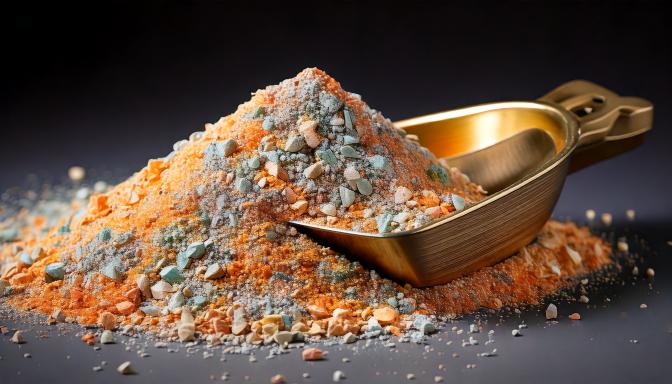
Creating a decorative matte texture and controlling light reflection through natural mineral matting agents
Gloss Control & Sheen Reduction (Matting Agent)
In addition to its role as a functional filler, perlite is widely specified as an effective gloss control or matting agent in architectural and industrial coatings. The irregular micro-surface geometry of micronized perlite particles scatters incident light rays, creating a smooth, non-reflective, matte or semi-matte finish.
This optical performance is particularly valued in decorative masonry finishes, ceiling paints, and industrial maintenance coatings where glare reduction is required. Utilizing refined grades from Esfahan Perlite Company eliminates the need for expensive synthetic silica matting additives, offering paint chemists an economical, natural mineral solution for precise gloss management.
Comparative Analysis: Perlite vs. Alternative Mineral Fillers
In paint manufacturing, various mineral extenders such as talc, mica, silica, and calcium carbonate are commonly used. Comparing these extenders against expanded perlite underscores its unique physical profile:
| Mineral Extender |
Density (g/cm³) |
Thermal Insulation |
Gloss Control |
Eco-Profile |
Relative Cost |
Key Technical Advantage |
| Expanded Perlite |
0.1 – 0.3 |
Very High |
Excellent (Matting) |
100% Natural / Green |
Economical |
Lightweighting, thermal barrier & uniform sheen reduction |
| Talc Powder |
2.6 – 2.8 |
Moderate |
Good |
Moderate |
Moderate |
Improves film smoothness and moisture barrier |
| Mica |
2.7 – 3.0 |
Good |
Moderate |
Moderate |
Higher |
Enhances scrub resistance and platy reinforcing structure |
| Silica |
2.2 – 2.6 |
Low |
Poor |
Low |
Moderate |
Delivers high abrasion resistance and mechanical hardness |
| Calcium Carbonate |
2.7 |
Low |
Poor |
Moderate |
Low |
General heavy bulk extender for low-cost paints |
Ultimately, perlite's competitive edge lies in its unique combination of ultra-low weight, insulating capability, and eco-friendly profile, providing paint formulators with a multi-functional mineral solution that lowers overall raw material costs.
Economic & Environmental Advantages
Integrating perlite into paint and resin formulations yields significant financial and ecological benefits. Due to its high expanded volume per unit mass, smaller quantities of perlite achieve higher batch yields, lowering raw material unit costs and maximizing plant throughput.
Furthermore, perlite efficiently occupies inter-particle voids, reducing binder absorption and optimizing resin demand. Environmentally, perlite processed at Esfahan Perlite Factory is a 100% natural, non-volatile, non-toxic mineral that contains zero volatile organic compounds (VOCs), making it an ideal choice for eco-labeled, low-VOC architectural coatings.
Formulation Guidelines for Perlite-Based Coatings
To achieve optimal performance when incorporating perlite into paint systems, formulators should observe the following engineering recommendations:
- Optimal Addition Rate: Depending on the coating type and target film thickness, perlite dosages typically range from 5% to 15% by total formulation weight.
- Architectural & Industrial Uses: Higher perlite loadings are recommended for textured masonry paints, fire-retardant coatings, and elastomeric roof renders where dead-load reduction and thermal insulation are prioritized.
- Dispersion Protocol: To preserve the cellular structure of perlite particles, add perlite during low-speed letdown or pre-dispersion stages rather than high-shear milling.
- Temperature Range: Mixing processes remain stable across ambient temperatures up to 60°C.
- Resin Compatibility: Micronized perlite exhibits excellent compatibility across waterborne and solventborne resins including acrylics, alkyds, epoxies, and vinyls.
Summary & Factory Inquiries
In conclusion, expanded perlite functions as an intelligent mineral additive in paint and resin manufacturing, offering an unbeatable combination of lightweighting, thermal insulation, gloss control, and chemical stability. It improves coating coverage, lowers raw material expenses, and supports sustainable, low-VOC paint formulations.
Grades manufactured at Esfahan Perlite Company provide standardized particle size distributions tailored for architectural, industrial, and specialty protective coatings. Contact our sales and engineering team for technical laboratory data sheets, micronized samples, and bulk factory quotes.
Hello. In our matte decorative coating line, we incorporated 8% micronized perlite powder from Esfahan Perlite. It yielded a highly uniform matte finish and improved coating adhesion on concrete substrates. Thank you for the high shipment consistency.
Greetings Eng. Shafiei. We are delighted that Esfahan Perlite micronized powder satisfied your exact formulation standards. Our micronized grades are engineered specifically for sensitive filler and matting applications. Best regards, Factory Editorial Team.
Is perlite suitable for heat-resistant industrial epoxy paints? Does it settle at the bottom of containers during storage?
Hello Mr. Bahrami. Yes, perlite's ultra-low specific gravity (unlike heavy silica or calcium carbonate) significantly minimizes settling risks in epoxy matrices while enhancing film thermal insulation. Best regards, Factory Editorial Team.