Why Does Perlite Hold a Strategic Role in Petrochemical Works?
In recent years, leveraging natural mineral materials like perlite in heavy processing industries has gained immense traction for optimizing output, cutting thermal losses, and promoting environmental sustainability. But why has perlite emerged as a strategic mineral above dozens of alternative materials across oil and petrochemical refining?
The answer lies in the unique structural cellular matrix and chemical-thermal resistance of this volcanic glass. Refined grades manufactured at Esfahan Perlite Complex — extracted with exceptional purity from the Garaghiyyeh Perlite Mine — provide an ideal medium engineered to satisfy demanding refinery standards.
Technical & Structural Characteristics in Petrochemicals
Perlite is a silica-rich ($\text{SiO}_2$) volcanic glass formed by the rapid cooling of acidic lava. Its physical structure is highly porous and lightweight, allowing its volume to pop multiple times its original size when exposed to extreme thermal processing.
Industrially, perlite is utilized in two main forms: crude perlite ore mined directly from deposits, and expanded perlite, which undergoes controlled furnace heating at 850°C to 900°C to yield white, ultra-lightweight granules with closed microscopic pores.
This cellular architecture endows refined grades processed at Esfahan Perlite Company with ultra-low bulk density, effective thermal/acoustic insulation, high chemical stability against weak acids and alkalis, and exceptional liquid absorption capacity—establishing perlite as an economical, efficient alternative to synthetic fillers in petrochemical refining.
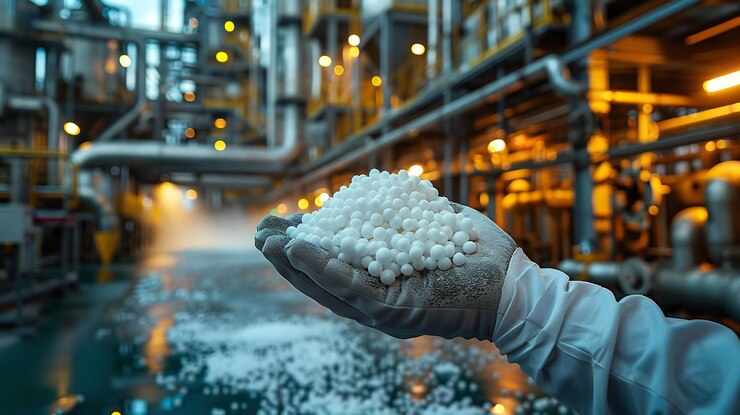
Bulk expanded perlite injection into the annular jacket of double-walled cryogenic vessels for sub-zero liquefied gas preservation
Specialized Petrochemical Applications
Diverse particle grades manufactured at Esfahan Perlite Complex perform critical roles across upstream exploration and downstream refinery processing:
1. Fluid Filtration & Precoat Separation (Filter Aid)
Expanded perlite acts as an efficient precoat filter aid in clarifying lube oils, solvents, fuels, and chemical streams. Its porous matrix permits high flow rates while capturing microscopic particulates, gums, and insolubles. Compared to diatomaceous earth, perlite offers lower bulk density, economical pricing, simpler backwashing, and superior thermal durability.
2. Ultra-Low Temperature Cryogenic Insulation
In liquefied natural gas (LNG), liquid oxygen, nitrogen, and LPG facilities, double-walled cryogenic storage vessels maintain liquid gas states at sub-zero temperatures as low as -240°C. Loose-fill expanded perlite fills the annular jacket space, forming an unbroken barrier that prevents boil-off gas losses and condensation.
3. Catalyst Support Beds (Catalyst Carrier)
Due to its high surface area and chemical inertness, perlite serves as a solid catalyst support or carrier in petrochemical reactors. This ensures uniform dispersion of active catalyst elements across the bed, improving reaction yield and enabling precise temperature control during cracking and synthesis.
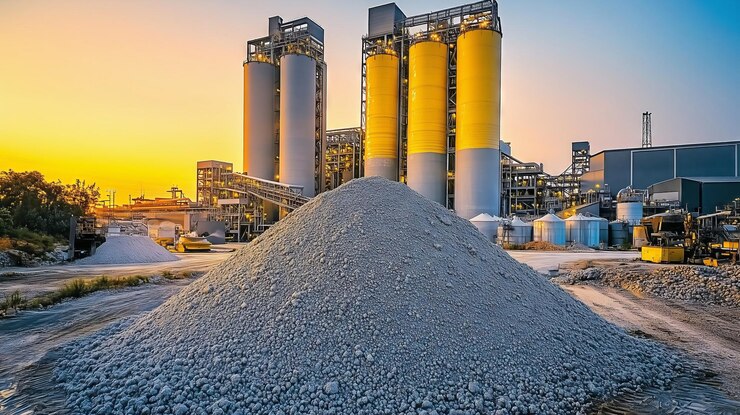
Micronized perlite used as an inert catalyst support medium in industrial refinery reactors
4. Hydrocarbon Spill Control & Environmental Remediation
Perlite sorbent powders function as rapid response materials during oil and chemical spills. Thanks to its porous oleophilic granules, perlite absorbs high volumes of floating oil on water or land, containing slicks for mechanical retrieval without introducing secondary toxic chemicals.
Technical Comparison with Alternative Mineral Additives
Evaluating perlite against traditional industrial materials highlights its technical and economic advantages:
| Mineral Material / Parameter |
Dry Density (kg/m³) |
Cryogenic Performance |
Filtration Efficiency |
Catalyst Support |
Relative Cost |
Primary Technical Advantage |
| Expanded Perlite |
40 – 120 |
Outstanding (down to -240°C) |
High Flow Rate |
Very High |
Economical |
Ultra-lightweight, cryogenic stability & complete chemical inertness |
| Diatomaceous Earth |
230 – 450 |
Poor |
Very Fine Particles |
Moderate |
Higher |
Fine particle trapping (higher differential pressure) |
| Expanded Vermiculite |
80 – 150 |
Moderate |
Poor |
Low |
High |
Exfoliated structure with good acoustic dampening |
Processing & Standardization Quality Control
A primary engineering consideration in perlite usage is maintaining precise grain size distribution and density. Variations in particle size affect filtration flow rates and compacted density in cryogenic jackets. Advanced furnace controls at Esfahan Perlite Factory guarantee uniform particle grading tailored to strict technical specifications.
Economic & Environmental Advantages
Integrating perlite into refinery operations yields tangible economic and ecological benefits. Economically, perlite's low unit weight, local mining reserves (Garaghiyyeh deposit), and efficient processing reduce material handling costs compared to synthetic alternatives.
Its long operational lifespan, chemical resistance, and reusable filter cake capacity lower plant maintenance expenses. Environmentally, perlite is a non-toxic, natural mineral that curtails greenhouse gas emissions by optimizing energy conservation in thermal equipment.
Summary & Factory Inquiries
Expanded perlite stands out as a versatile, lightweight, and chemically inert mineral indispensable to modern oil and gas operations. Its performance in cryogenic insulation, fuel filtration, catalyst carrier beds, and spill response delivers tangible safety and financial benefits.
Backed by certified XRD and XRF laboratory testing and four decades of manufacturing mastery, Esfahan Perlite Company supplies standardized mineral grades tailored to meet the demanding requirements of domestic and international petroleum enterprises.

Hello. We utilized bulk fine expanded perlite from Esfahan Perlite for double-walled LPG liquid gas storage tank insulation. Thermal stability and zero pressure drop in the insulation jacket were exceptional. Thank you for prompt dispatch.
Greetings Eng. Nouri. We are delighted that Esfahan Perlite cryogenic grade met your strict petrochemical project standards. Our cryogenic expansion grades are processed under zero-moisture protocols specifically for sub-zero temperature preservation. Best regards, Factory Editorial Team.
Is it possible to receive micronized perlite with specified specific surface area (BET analysis) to serve as an oxidation catalyst support bed?
Hello Dr. Rezaei. Yes, Esfahan Perlite Factory can process custom micronized particle sizing and porosity profiles based on custom XRD and BET requirements. Please contact our R&D unit for technical consultation. Best regards, Factory Editorial Team.