Introduction & The Importance of Insulation with Expanded Perlite
In today's industrial landscape, managing energy consumption and mitigating heat loss represents one of the largest economic and environmental challenges across building and heavy industrial sectors. Conventional insulating materials often carry significant limitations due to heavy dead weight, fire hazards, or the emission of toxic chemical gases during combustion.
In this context, expanded perlite produced at Esfahan Perlite Complex serves as a natural, lightweight, and chemically inert solution. Featuring a cellular matrix with millions of microscopic dead-air pockets, perlite restricts thermal and acoustic energy transfer while providing uncompromised passive fire resistance.
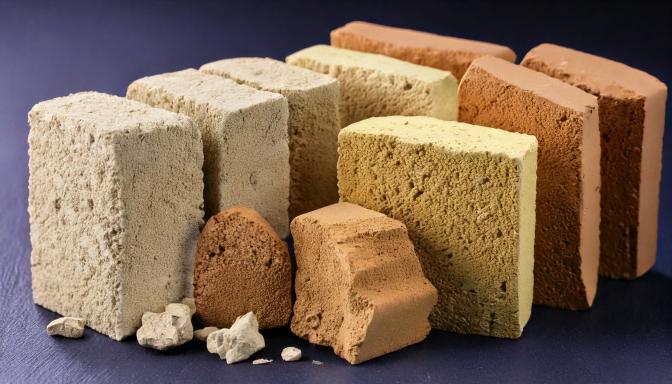
Microscopic trapped air cell matrix in expanded perlite providing exceptionally low thermal conductivity
Why Is Perlite an Outstanding Thermal & Acoustic Insulator?
When raw perlite ore is heat-expanded in specialized furnaces at 850°C to 900°C, its volume pops up to 4 to 20 times its original size. The result is ultra-lightweight white granules with microscopic porous structures containing dead-air pockets. Because stagnant air is one of nature's finest thermal insulators, conductive heat transfer is reduced to a minimum.
Furthermore, unlike synthetic polymer foams (such as EPS or polyurethane) and fibrous insulation, perlite is 100% inorganic. Consequently, perlite will never burn, melt, or sag in high heat, nor will it release toxic or lethal fumes during a fire event.
| Comparative Parameter |
Expanded Perlite |
Expanded Polystyrene (EPS) |
Rockwool / Glasswool |
| Fire Resistance |
100% Non-Combustible (up to 1100°C) |
Combustible; releases toxic smoke |
Resistant up to binder threshold |
| Lifespan & Stability |
Permanent; zero physical decay |
Degrades under UV and high heat |
Loses performance if moisture is absorbed |
| Safety & Eco-Profile |
Natural, inert, non-toxic |
Petroleum chemical origin |
Risk of skin & respiratory irritation |
| Pest & Mold Resistance |
Completely impervious to insects & mold |
Can be damaged by rodents |
Potential fungal accumulation over time |
Applications of Insulating Perlite Across Industries
The distinct physical properties of grades engineered at Esfahan Perlite Factory give perlite a leading role across a broad spectrum of insulation applications:
1. Building & Architectural Insulation
In construction, loose-fill perlite is poured directly into double-wall masonry cavities, hollow concrete blocks, ceiling voids, and floor screeds. When blended with Portland cement or gypsum, it creates ultra-lightweight insulating renders that form a seamless thermal barrier over building envelopes.
2. Oil, Gas & Cryogenic Equipment (Low-Temperature Storage)
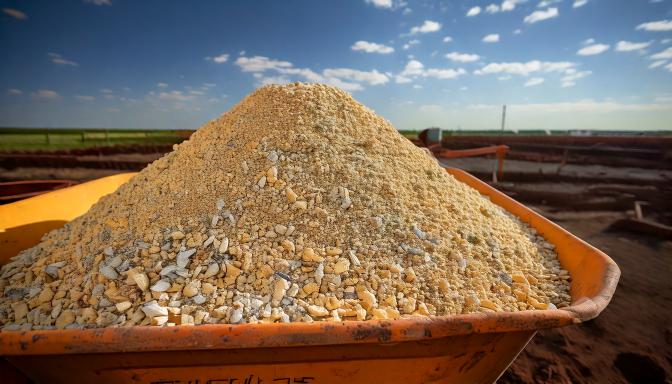
One of perlite's most critical industrial roles is cryogenic insulation inside double-walled storage tanks holding liquefied gases at extreme cryogenic temperatures—such as liquid oxygen, nitrogen, argon, and LNG down to -240°C. Bulk expanded perlite acts as an irreplaceable loose-fill medium filling tank annular spaces to prevent boil-off gas losses.

Bulk expanded perlite filling annular spaces in double-walled cryogenic petrochemical tanks
3. Cold Storage, Food & Pharmaceutical Facilities
Maintaining stable internal temperatures is crucial in industrial cold storage, food processing plants, and pharmaceutical warehouses. Because perlite is non-toxic, vermin-proof, mold-resistant, and odorless, it forms a reliable, hygienic insulation envelope for cold storage panels.
4. Steel Foundries, Refractories & Smelting Works
In high-temperature metallurgy, expanded perlite is distributed as a loose blanket over molten metal ladles and ingot molds. This ultra-lightweight layer slows heat dissipation from the molten bath, preventing unwanted thermal shock and surface oxidation prior to pouring.
Key Benefits of Perlite as Thermal & Acoustic Insulation
Integrating expanded perlite into industrial and architectural insulation delivers clear technical and financial advantages:
- Significant Dead Weight Reduction: Unmatched low bulk density reduces structural loading.
- Passive Fire Protection: Exceptional stability up to temperatures exceeding 1100°C.
- Energy & Fuel Savings: Reduces heat loss and cuts furnace fuel consumption by up to 30%.
- High Acoustic Dampening: Cellular pores break sound waves and attenuate ambient noise pollution.
- Eco-Friendly & Non-Toxic: 100% natural mineral free from volatile organic compounds (VOCs).
Application Methods for Perlite Insulation Projects
Depending on project requirements, expanded perlite insulation is deployed in three primary methods:
Method 1 (Loose-Fill Pouring): Granular perlite is poured or pneumatically blown into cavity walls, sub-floor voids, or the double-walled annular spaces of cryogenic vessels.
Method 2 (Composite Mortars & Renders): Blending perlite with cement, gypsum, or organic/inorganic binders to produce lightweight insulating concrete or spray-applied fireproofing coats.
Method 3 (Pre-Formed Insulating Blocks & Pipe Covers): Combining perlite with sodium silicate binders under pressure to manufacture rigid thermal pipe insulation jackets and refractory blocks.

Applying lightweight perlite mortar for seamless building envelope thermal protection
Summary & Factory Inquiries
Expanded perlite stands out as a natural, ultra-lightweight, non-combustible, and cost-effective insulator for controlling thermal energy and sound in structural, petrochemical, and metallurgical operations. Utilizing perlite curtails heat transfer dramatically, safeguarding equipment longevity and building safety.
For technical grade selection, cryogenic specification sheets, and bulk factory orders, contact the technical sales team at Esfahan Perlite Company.
Hello. We utilized bulk expanded perlite from Esfahan Perlite for double-wall cryogenic oxygen tank insulation at Assaluyeh Petrochemical Complex. Boil-off loss was minimized effectively, and the delivered shipment was completely dry and dust-free. Excellent service from sales.
Greetings Eng. Farhadi. We are delighted that Esfahan Perlite cryogenic grade met your strict petrochemical standards. Our cryogenic expansion grades are processed under zero-moisture protocols specifically for extreme cold storage environments. Best regards, Factory Editorial Team.
Is it feasible to blend fine perlite with base plaster to create soundproof plaster coats for apartment party walls?
Hello Mr. Rezaei. Yes, mixing 0–1 mm fine perlite powder with plaster creates an acoustic plaster render that significantly reduces noise transmission between adjacent apartment units. Best regards, Factory Editorial Team.